
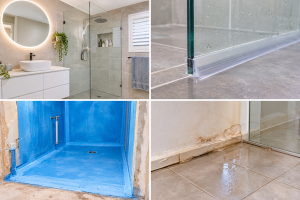
DIY Bathroom Renovation Traps – What I Commonly Find During Building Inspections
DIY bathroom renovations can look fantastic when finished, but as a building inspector, I regularly come across problems that are hidden behind the tiles and fixtures.
One of the biggest concerns I see is homeowners undertaking their own waterproofing and plumbing work without understanding the technical requirements, licensing rules or certification involved.
Here are some common bathroom renovation traps worth knowing about before starting your next project.
1. Frameless shower screens and incorrectly installed waterstops
This is one of the more common issues I encounter.
Frameless shower screens are popular because they create a modern, open look. However, getting the waterproofing right is just as important as getting the glass installed correctly.
I often find DIY renovations where homeowners have little or no understanding of the building requirements relating to waterstops, including where they need to be installed and their correct positioning.
A waterstop is an important part of the waterproofing system. Its purpose is to help prevent water escaping from the shower area and entering adjoining floor areas.
Simply installing a shower screen and running a bead of silicone along the bottom does not necessarily provide adequate waterproofing.
Getting this wrong can allow water to escape beyond the shower, potentially resulting in damage to adjoining floor coverings, wall linings and other building materials.
2. DIY plumbing and waterproofing – a costly mistake
Another issue we regularly come across is homeowners carrying out their own plumbing and waterproofing installations, often without understanding the licensing requirements or the potential consequences.
In Queensland, regulated plumbing and drainage work must be undertaken by appropriately licensed plumbers. Depending on the work, plumbing compliance documentation must also be provided.
Waterproofing is also regulated work. QBCC licensing requirements apply to waterproofing work exceeding $3,300, and the appropriate certification must be provided.
Some important Queensland compliance requirements to be aware of include:
Form 4 – Notifiable Plumbing Work: The licensed plumber must lodge this with the QBCC for applicable notifiable plumbing work and provide a copy to the owner.
Form 1 – Plumbing Permit Application: Required where plumbing and drainage work is classified as permit work and requires council approval.
Form 43 – Aspect Certificate: Used by the appropriately licensed QBCC contractor to certify relevant waterproofing work on a detached residential house where the work is subject to building development approval.
Form 30 – QBCC Licensee Aspect Certificate: Used for applicable accepted development (self-assessable) work where a building development approval is not required.
The certification requirements depend on the type of renovation, the building classification and whether building development approval is required. An ordinary bathroom renovation does not automatically require a Form 12.
Unfortunately, when homeowners undertake regulated work themselves or engage unlicensed contractors, the appropriate compliance documentation is often missing.
This can create significant problems when selling a property, dealing with insurance matters or trying to establish whether the renovation was completed in accordance with Queensland building requirements.
My advice: Don’t assume that because a bathroom renovation looks professionally finished, the plumbing and waterproofing have been completed correctly or that the required compliance documentation exists. Always use appropriately licensed tradespeople and ask for the relevant certificates when the work is completed.
3. Poor waterproofing and drainage
Waterproofing is not something you want to cut corners on.
I regularly see bathrooms where waterproofing appears to have been treated as a simple painting exercise, without proper preparation or attention to junctions, corners and plumbing penetrations.
Bathroom floors also need to direct water towards the floor waste. Poorly installed tiles, incorrect falls and badly positioned wastes can result in water pooling or escaping from the shower area.
Once the tiles are installed, the waterproofing membrane is concealed. Mistakes can remain undetected until moisture damage becomes visible.
4. Poor silicone and inadequate sealing
Silicone is commonly used around shower screens, baths and vanities. However, it is not a replacement for a correctly installed waterproofing system.
I often see deteriorated or poorly applied silicone being used to cover up underlying problems.
Silicone requires proper surface preparation and regular maintenance. It should never be relied upon to compensate for defective waterproofing.
My advice before renovating or buying
Bathroom renovations involve much more than choosing attractive tiles, tapware and shower screens.
Waterproofing, waterstops, drainage and plumbing all need to be considered before the finishing work begins. Make sure appropriately licensed tradespeople are engaged and obtain the relevant compliance documentation when the work is completed.
If you are purchasing a property with a recently renovated bathroom, don’t assume that because everything looks new, it has been installed correctly.
During our pre-purchase building and timber pest inspections, we look for visible signs of defects, including moisture damage, deterioration and other concerns that may warrant further investigation.
It is important to understand that a standard building inspection is visual and non-invasive. We cannot confirm the condition of concealed waterproofing membranes, waterstops or plumbing connections without further investigation.
A final word from me: A bathroom renovation should add value and enjoyment to your home, not become an expensive repair project a few years down the track. Getting the important work right from the beginning can save considerable money and frustration.
Premier Building and Pest Inspections
Gold Coast Professional pre-purchase building and timber pest inspections throughout the Gold Coast and surrounding areas.